
Green Hydrogen for Renewable Energy Projects: A Silver Maple Approach
What is Green Hydrogen
Green hydrogen is emerging as the future of renewable energy projects. By using an electrical current to split water (H2O) into hydrogen (H2) and oxygen (O), green hydrogen creates a clean fuel source without emitting carbon dioxide. This process, known as electrolysis, is becoming an important solution in the transition toward low-carbon energy systems.
At its core, green hydrogen is an extremely energy-dense fuel source that can later be converted back into electricity through a fuel cell. Unlike fossil fuel-based systems, the only byproduct created during this process is water vapor. Not all hydrogen is created equally. The environmental impact depends entirely on how the hydrogen is produced:
- Gray hydrogen is derived from fossil fuels and produces significant carbon emissions.
- Blue hydrogen reduces emissions but still relies on natural gas and carbon capture technologies.
- Green hydrogen is produced using renewable electricity and creates zero emissions during production and use.
How Silver Maple’s Green Hydrogen Systems Work
A green hydrogen system follows a relatively straightforward cycle:
1: Water
The process begins with water as a renewable energy input. Surprisingly little is required, only a few gallons per kilogram of hydrogen produced.
2: Electrolysis
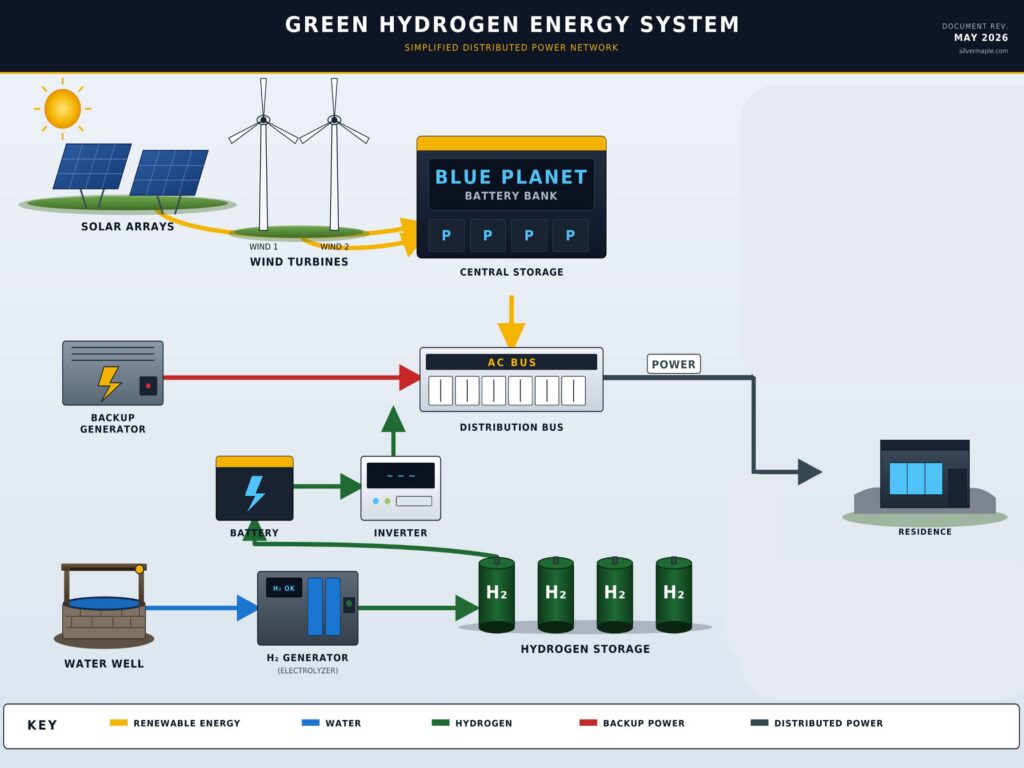
Electricity generated from renewable sources, such as solar or wind, powers an electrolyzer. The electrolyzer passes an electrical current through the water, separating it into hydrogen and oxygen molecules.
3: Storage
Once produced, hydrogen can be stored in several ways depending on the application and energy goals.
- Atmospheric Pressure: Hydrogen can be stored in standard steel tanks at low pressure, though this offers the lowest energy density relative to the tank size.
- Compressed Storage (up to 300 bar): Compressing hydrogen dramatically increases energy storage capacity and begins to separate hydrogen from traditional energy solutions like batteries.
- High-Pressure Storage (300-700 bar): Higher compression dramatically increases energy capacity, though it requires advanced carbon fiber tanks and additional engineering and cost considerations with high risk.
- Liquid Hydrogen: Super-cooling hydrogen to near absolute zero converts it into a liquid rather than gas, creating extremely high energy density. While a powerful super battery, this approach can become cost-prohibitive for many applications.
4: Power
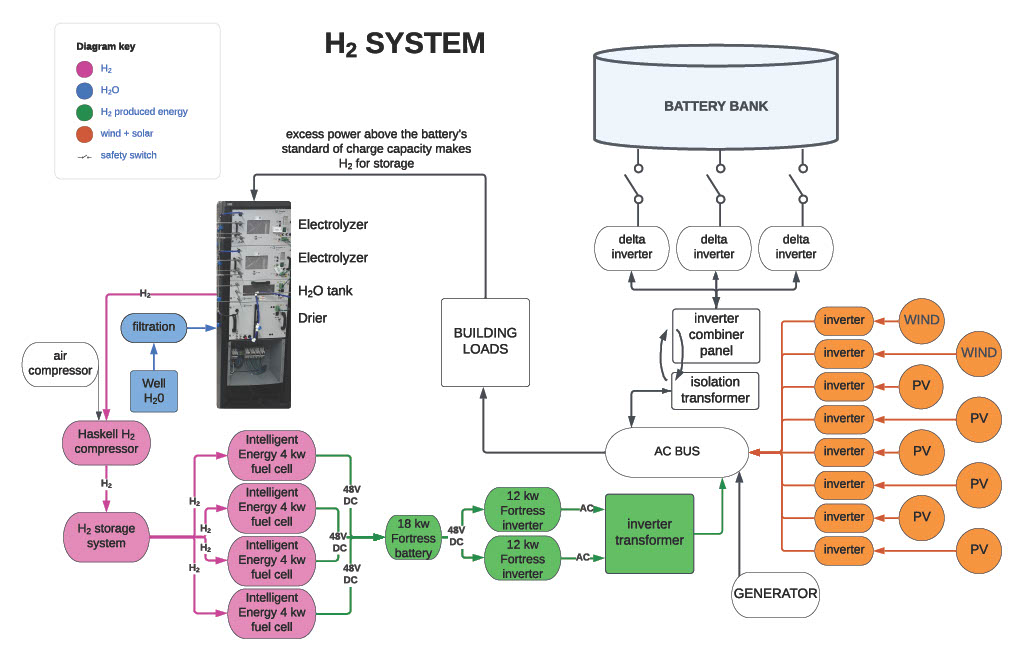
In Silver Maple’s systems, stored hydrogen flows from compressed tanks through fuel cells that convert the hydrogen back into electricity.
Inside the fuel cell, hydrogen passes through a PEM (proton exchange membrane), which separates electrons from protons. As those electrons move back toward the protons through an external circuit, they generate electricity that can power a home, hangar, or commercial facility.
The only byproduct is water vapor.
5: Power Management
The energy generated is managed via inverters through storage systems such as batteries or capacitors. These systems help maintain stable, reliable power delivery while the hydrogen system continuously replenishes stored energy.
Over time, Silver Maple has developed deployable hydrogen energy systems designed for scalability and adaptability. In many cases, the entire production, compression, and storage system can fit within a single 8×20 storage container. Additional storage capacity can then be added through supplementary storage pods.
This approach allows systems to scale efficiently depending on project needs.
Challenges + Solutions in Renewable Energy Construction
As sustainable building continues to evolve, green hydrogen is becoming an increasingly important tool in renewable energy construction.
One of the biggest challenges with renewable energy systems is intermittency. Solar panels only generate power when the sun shines, and wind systems only produce energy when conditions cooperate. Traditional battery systems help bridge that gap, but they become increasingly expensive as storage demands grow.
Silver Maple has designed and installed battery systems as large as one megawatt for homes and commercial projects. During spring, summer, and fall, these systems often reach full charge by early morning and remain full throughout the day. In most cases, excess solar production during these months goes unused because demand is met, and the batteries cannot store additional power.
The challenge arrives in winter. As daylight hours shorten and cloud cover increases, even large solar systems can struggle to maintain battery charge levels. At that point, many systems rely on backup generators or favorable wind conditions to continue operating.
Silver Maple’s Solution
When Silver Maple first began exploring hydrogen systems, we assumed turnkey solutions already existed. That quickly proved untrue.
Instead, our team embarked on an intensive learning process involving engineers, researchers, and specialists from around the world. Over time, our in-house mechanical division evolved into a team capable of designing, integrating, and deploying highly customized hydrogen systems.
Today, one of the biggest barriers to adoption remains the lack of standardized, off-the-shelf solutions.
Successfully implementing green hydrogen systems requires:
- Mechanical expertise
- Electrical integration knowledge
- Safety engineering
- Long-term system planning
- Real-world operational experience
These systems are too complex for guesswork, which is why working with an experienced builder like Silver Maple matters.
How Green Hydrogen Acts as a Clean Fuel Solution
At first glance, increasing battery storage seems like the answer. But battery expansion scales in cost. If a one-megawatt battery system costs roughly $1.2 million, doubling storage capacity easily means doubling the investment. There really isn’t any economy of scale with batteries. If you want 5x storage, you will spend 5x the price. This is where green hydrogen changes the equation.
While there is an initial cost hurdle for Silver Maple to design and build the production and conversion systems, our systems offer two major advantages:
1: Green Hydrogen Uses Energy That Would Otherwise Be Wasted
When renewable systems overproduce energy during sunny or windy conditions, excess electricity can be redirected into electrolyzers to produce hydrogen instead of being discarded.
2: Green Hydrogen Storage Scales More Affordably
More hydrogen storage simply requires adding tanks, not more equipment. For each megawatt you add in storage, you only add tens of thousands of dollars at most, not millions, when you achieve it through H2. This is the game-changer!
Expanding long-duration storage capacity becomes dramatically more cost-effective over time. This creates opportunities for massive-scale energy storage without environmental concerns associated with lithium-ion mining, battery disposal, or fossil fuel dependence.
Rather than relying solely on intermittent energy sources, hydrogen allows projects to store and deploy energy when it’s needed most. That’s a major step forward for both commercial and residential builds.
Renewable Energy Projects with Silver Maple
With over 20 years of experience, Silver Maple delivers forward-thinking, high-performance builds. In addition to building climate-responsive homes, our methods include innovative renewable energy projects that include green hydrogen systems. Our goal is to create buildings that are not only sustainable today, but resilient for decades to come.
Integrating Hydrogen into Aviation and Residential Builds
Within our Aviation Division, hydrogen presents several opportunities.
One application involves backup power generation for critical infrastructure such as aviation facilities, refrigerated warehouses, and data centers. We are also exploring deployable storage container-based hydrogen systems as a stand-in for eventual power upgrades. This will handle emerging EVTOL (electric vertical takeoff and landing) charging requirements.
On the residential side, green hydrogen technology grew directly from our work, designing fully off-grid and long-term energy-resilient homes.
For homeowners facing frequent outages or seeking energy independence, green hydrogen systems offer a solution. Once the infrastructure is in place, these systems can provide a sustainable, infinite energy source with few moving parts and long-term reliability.
Current projects, including work across aviation, residential, and mechanical divisions, continue to shape and refine these systems in real-world environments.
3 Benefits of Green Hydrogen for Sustainable Builds
As industries look for scalable ways to reduce their environmental impact, green hydrogen is quickly becoming a cornerstone of modern sustainability strategies.
1: Reduced Carbon Footprint
Traditional diesel backup systems generate substantial emissions, including carbon dioxide, nitrogen oxides, and particulates. They also create ongoing fuel storage and disposal concerns.
When powered by renewable electricity, green hydrogen systems create a closed-loop cycle: Solar and wind energy power electrolyzers, hydrogen is stored, fuel cells generate electricity, and water vapor is released.
2: Energy Resilience
Hydrogen systems excel at long-duration energy storage. Unlike traditional, expensive batteries, hydrogen storage can expand. This makes green hydrogen valuable for off-grid homes, remote infrastructure, aviation facilities, and critical backup systems.
3: Long-Term ROI + Adaptability
While green hydrogen systems require a significant upfront investment, they offer measurable long-term advantages. As energy regulations continue evolving and net-zero building initiatives become more common, hydrogen infrastructure positions projects for future compliance and adaptability.
Interested in other sustainable construction methods? Explore our blog on how sustainable construction is shaping modern aviation and aircraft hangar design.
The Future of Renewable Energy Projects and Green Hydrogen
For clients investing in renewable energy projects, green hydrogen represents a smart, proactive decision. As adoption grows across industries, hydrogen is expected to play an increasingly important role in:
- Aviation infrastructure
- Commercial resilience systems
- Off-grid residential construction
- Net-zero building initiatives
- Large-scale renewable energy storage
At Silver Maple, we continue exploring how hydrogen can integrate across multiple divisions and project types while supporting long-term sustainability goals.
We believe the future of construction will depend not only on how buildings are built, but also on how they generate, store, and use energy.
Why Silver Maple Leads in Green Hydrogen Construction
With over 20 years of experience, we bring complex systems together to create spaces that are efficient, resilient, and built to last. Our approach combines innovation and craftsmanship with advanced mechanical integration and renewable energy expertise.
At Silver Maple, we design with client value and long-term environmental responsibility in mind. By adding to the foundations of a healthy building, we help our clients invest in the future of their homes and the planet.
Build Your Next Renewable Energy Project with Confidence
If you’re looking for a partner in renewable energy construction or want to explore green hydrogen solutions, get in touch with the Silver Maple team to learn how we can bring your vision to life.