
The Art of Wallpaper and 7 Design Trends of 2026
We’re done playing it safe with monochrome tones. The evolution of wallpaper art is emerging this year, and now it’s less about following a trend and more about an opportunity for design.
We were recently reminded of just how much history and artistry exists behind wallpaper during a recent visit to the Henry Sheldon Museum in downtown Middlebury. As part of its Behind the Yellow Wallpaper summer series, the museum hosted “Wallpaper Revealed: The Artistry of Wallpaper,” to explore ideas around mental health, gender, creativity, and history, presented by Alexandra Weimer and interior designer Amy Oliver Beaupre.
The presentation explored wallpaper’s history, its relationship to art and interior design, and the craftsmanship behind some of the patterns that have influenced interiors for generations. Wallpaper is back, and its versatility has evolved.
Why is Wallpaper Making a Comeback?
Historically, wallpaper was more than a way to cover a wall. Patterned papers could imitate expensive textiles, introduce elaborate scenic landscapes, or bring botanical motifs and other artwork into a home. Designers such as William Morris helped establish wallpaper as an important part of the Arts and Crafts style, creating patterns that are still recognizable today.
At the Henry Sheldon presentation, we were given a glimpse into just how much craftsmanship went into historic wallpaper. Alexandra Weimer’s interest in colorful wallpaper found within the museum’s collection eventually helped expand what began as a small display into an entire room.
The presentation also included a look at traditional hand-blocked wallpaper production, showing how patterns were built, layer by layer, using carved wooden blocks
From Pattern Heavy to Minimalism
With that, the presentation moved to Amy Beaupre, an interior designer with decades of experience and a background in art, who claims to love wallpaper so much that she tries to encourage all her clients to use it in their homes.
Amy shared wall covering trends over time, including historical and cultural influences on the traditional themes in wallpaper – scenic, floral, toile, and damask patterns – and artists on the forefront of the movement whose innovation still grace the walls of famous locations.
In the 1980s, small-scale florals and country-inspired patterns were popular. Rooms could often pair wallpaper art with coordinating curtains and fabrics, saturating a space with patterns from floor to ceiling.
The 1990s brought a different aesthetic. DIY stenciling and sponge painting became popular, while Tuscan-inspired interiors and faux finishes contributed to a period when traditional wallpaper became less prominent.
Then came the accent wall: one boldly painted wall surrounded by neutral ones.
By the 2010s, many interiors had moved toward monochromatic whites and grays.
Now, the pendulum is swinging again.
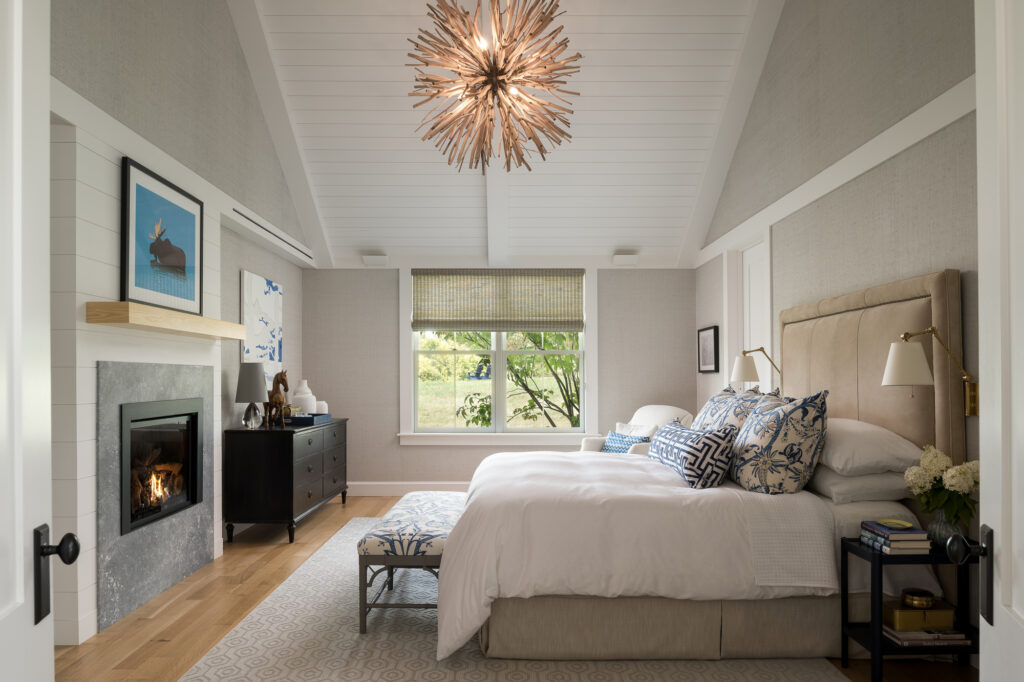
After years of “millennial gray,” homeowners and designers are embracing color, texture, pattern, and more personalized interiors. Current design coverage reflects that larger shift, with statement wallpaper, textured wallcoverings, murals, and heritage-inspired patterns all appearing prominently in 2026 interiors.
The result is taking the best parts of the past—pattern, craftsmanship, personality, and visual interest—and using them in new ways.

What The Experts are saying
7 Wallpaper Design Trends We’re Seeing Right Now
Here are some wallpaper art ideas to consider in your home.
1: Botanical and Nature Inspired Wallpaper
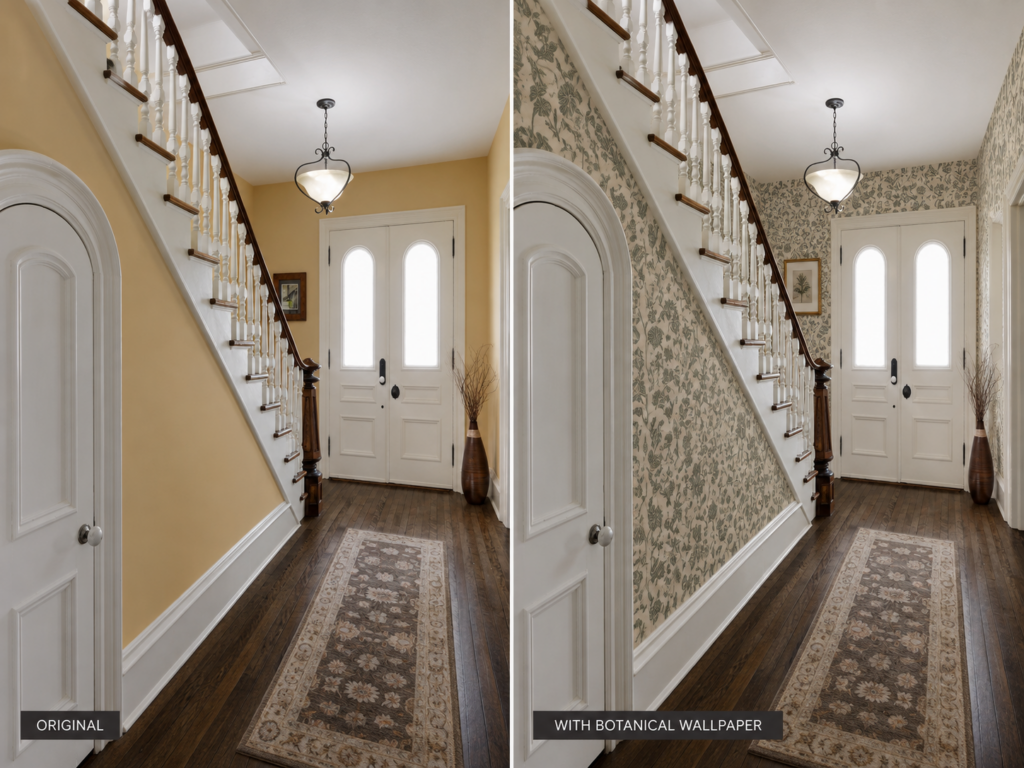
Nature has always been a source of wallpaper design, from the botanical patterns of William Morris to contemporary interpretations of leaves, flowers, and landscapes.
Today, botanical wallpaper is being used in both traditional and modern interiors.
Why it works: A smaller-scale botanical can provide a subtle layer of pattern, while an oversized leaf or floral can function almost like a mural. The goal is to bring the visual rhythm of the natural world indoors.
2: Large-Scale Florals and Maximalist Patterns
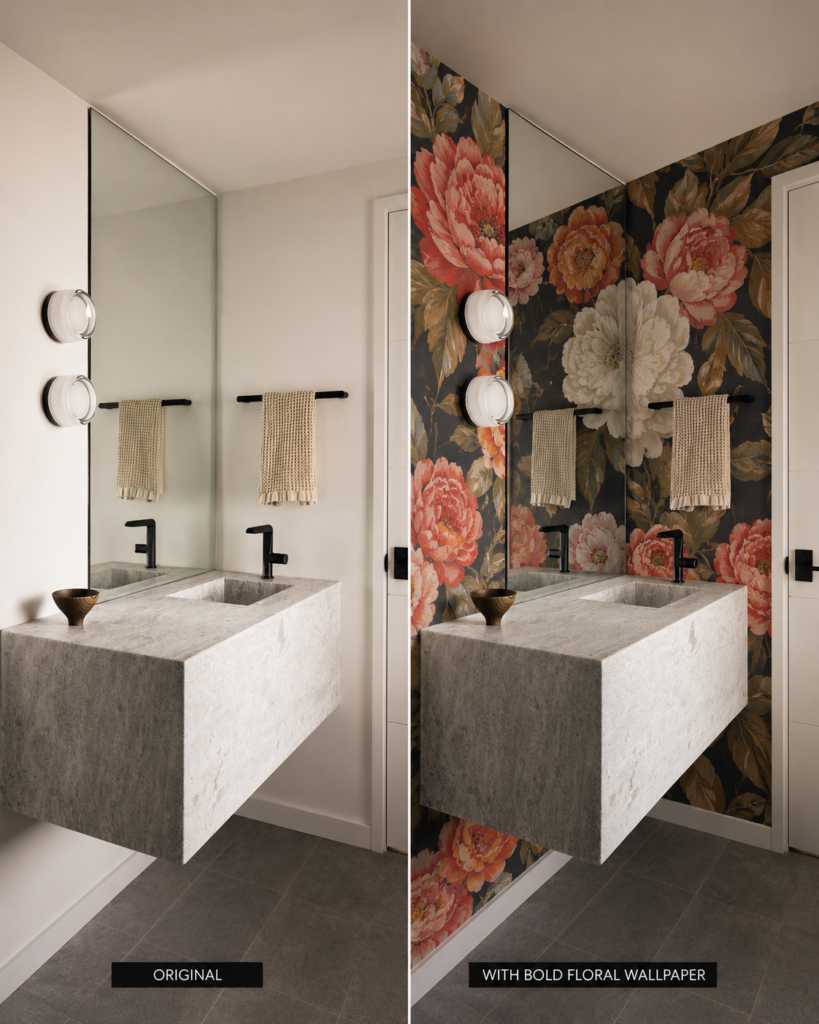
Large-scale florals and expressive patterns are one of the easiest ways to make a room memorable. Rather than covering a wall with a small repeating motif, these designs create a stronger visual focal point.
This is where wallpaper design starts to function like artwork.
Scalamandré’s iconic Zebras, for example, demonstrates how a wallpaper pattern can become recognizable in its own right. Originally created for Gino’s restaurant in New York City, the pattern became famous for its oversized, playful composition.
Why it works: A powder room, for example, has limited square footage but can accommodate a much more dramatic design because it isn’t a space where you spend hours at a time. In a small room, wallpaper makes the space feel more finished and intentional.
3: Heritage Patterns: Toile, Damask and Traditional Motifs
Toile, damask, traditional florals, and other heritage-inspired patterns continue to evolve because their underlying compositions are strong enough to work across different periods.
A pattern may have originated decades or even centuries ago, and still feel appropriate in a contemporary home.
Schumacher’s Queen of Spain, for example, dates to 1963 and became particularly recognizable after appearing in the background of a 1965 photograph of Mick Jagger. William Morris’s designs offer another example. Patterns created during the Arts and Crafts style movement continue to be reproduced and reinterpreted today.
Why it works: Think about contrast. Pairing heritage wallpaper art or an old pattern with contemporary furniture, modern lighting, or architectural details can make the pattern feel current. Both elements become interesting.
4: Textured and Natural Looking Wallpaper
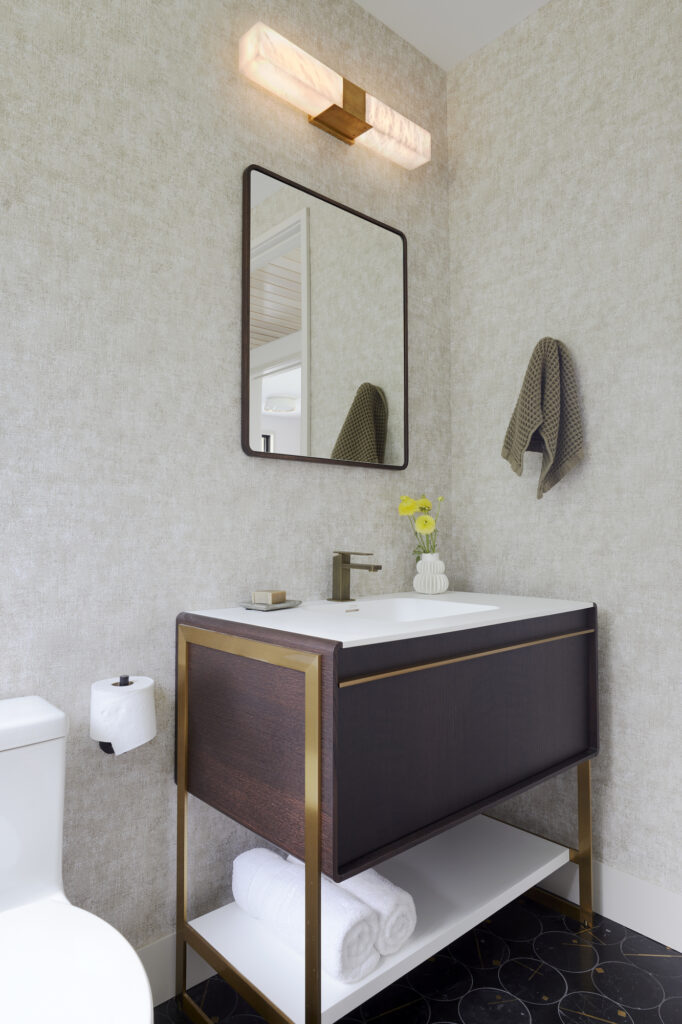
Textured wallcoverings—including grasscloth, linen-look papers, woven materials, and subtle embossed designs—add depth without introducing a strong graphic motif.
This is particularly appealing for homeowners who like the warmth of wallpaper but aren’t ready for a bold floral or mural.
Texture is also part of the broader movement toward warmer, more tactile interiors in 2026.
Why it works: A warm grasscloth or linen-inspired wallcovering can create a sophisticated backdrop for artwork, woodwork, furniture, and lighting. Current wallpaper art increasingly emphasizes materials that add dimension and respond to changing light throughout the day.
5: Scenic and Mural-Style Wallpaper Art
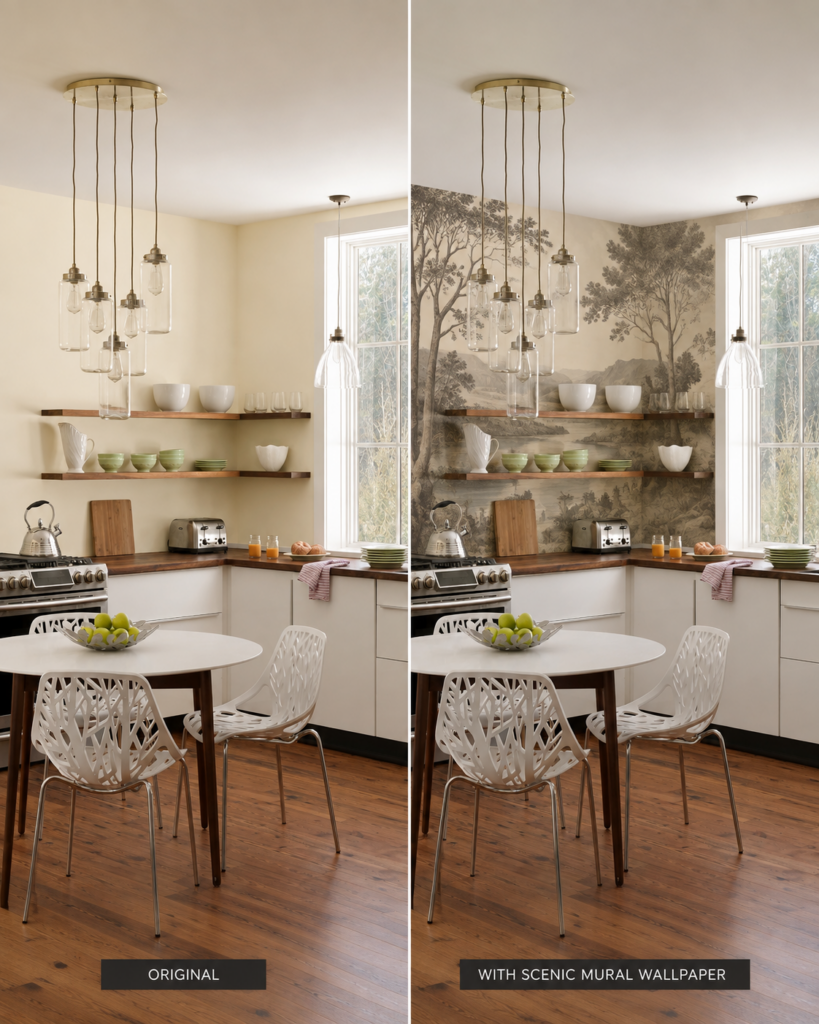
Scenic and mural-style wallpaper can transform a full-length wall into a landscape, garden, architectural scene, or other illustrated composition.
The effect is closer to commissioning a large piece of artwork than selecting a traditional repeating wall covering.
Why it works: Furniture, doors, windows, and built-ins can interrupt a mural’s composition. A scenic and mural-style wall covering shapes the design of your home and encourages a minimalist approach to that space.
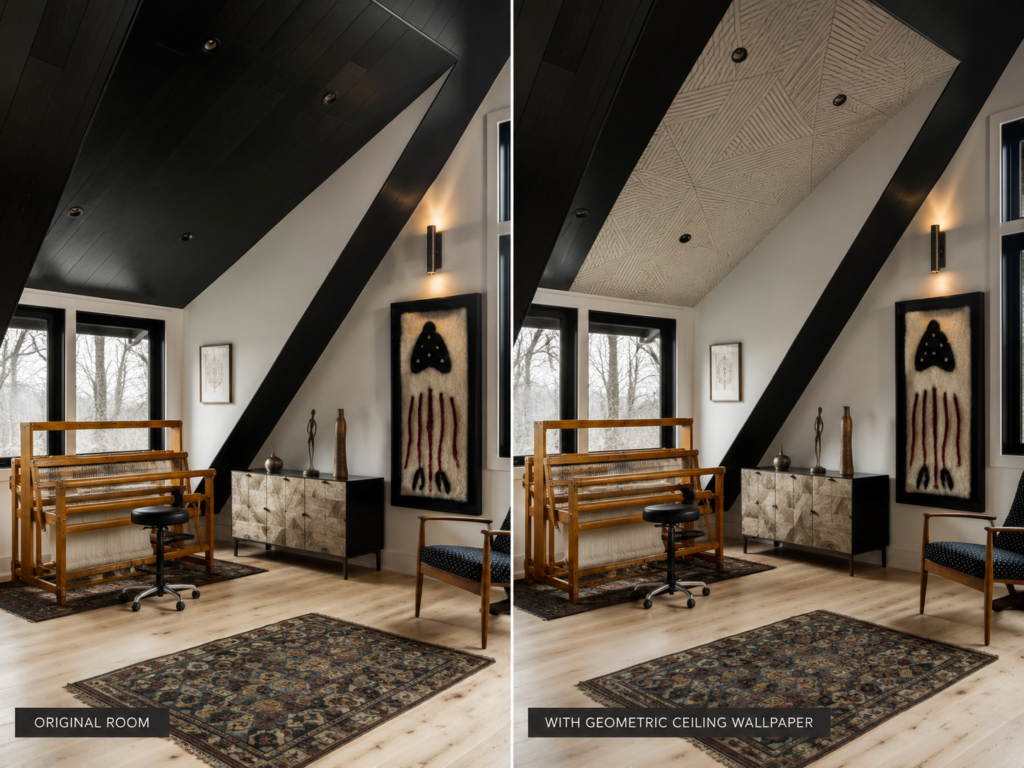
6: Wallpaper on the Ceiling
Designers are treating the “fifth wall” as the new accent wall. Ceiling wallpaper is becoming a creative way to add patterns without covering every vertical surface. It can be particularly effective in rooms where the ceiling is already an architectural feature.
Why it works: A patterned ceiling works well when the walls, trim, or cabinetry pull a color from the wallpaper. This creates a seamless connection between surfaces rather than the ceiling feeling like a separate design decision, making an entire room feel immersive.
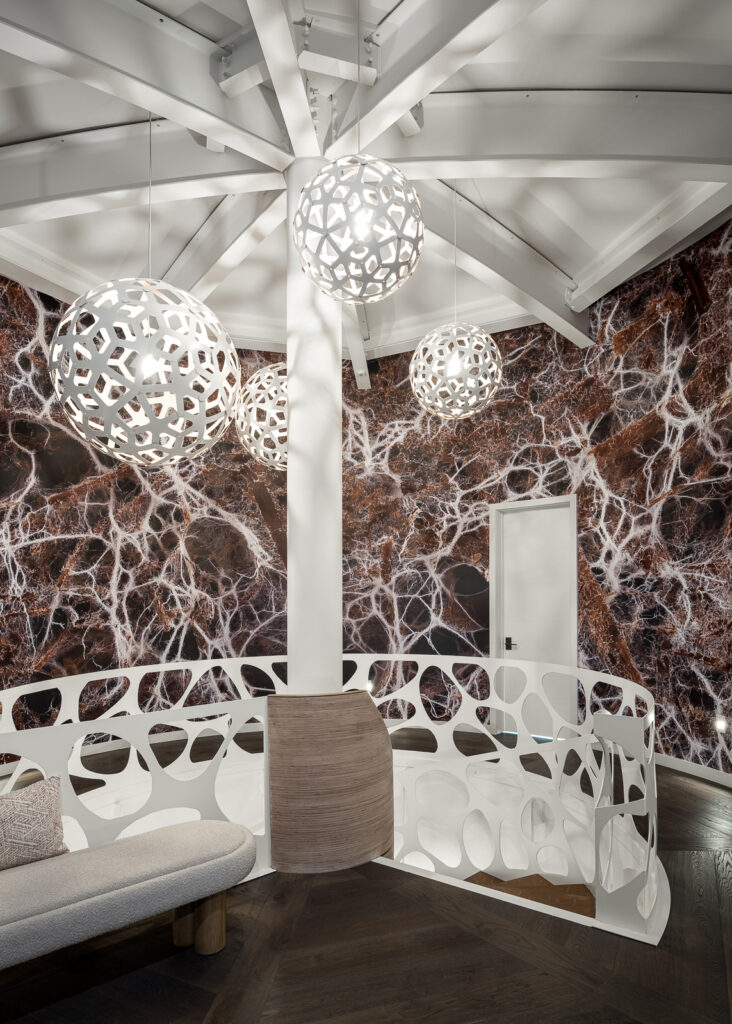
7: Organic + Soft Wallpaper Art
Instead of thinking of wallpaper as something that covers a wall, designers are increasingly treating it as an artistic element within the room.
That idea has deep roots. C.W. Stockwell’s Martinique, created in 1942 and famously associated with the Beverly Hills Hotel, is a perfect example. Josef Frank’s Citrus Garden, originally designed in 1947, is another.
Why it works: These designs endure because they have a strong visual identity. Soft curves and imperfections bring personality and charm without dominating a room.
Wallpaper is just one way to introduce color and personality into a home. If you’re considering a broader refresh, take a look at our blog dedicated to how custom woodworking shapes every home for more ideas.
How to Use Wallpaper Design in Your Home
A large room can generally handle a larger pattern, while smaller rooms can benefit from either small-scale patterns or bold designs used intentionally. Don’t assume that a small room requires a small pattern, though. A large-scale pattern in a powder room can be incredibly effective. The important thing is proportion.
Start Small in a Powder Room
Because they’re small and often separate from the primary living spaces, they can accommodate stronger colors and patterns.
Set a Scene in Your Bedroom
Bedrooms benefit from wallpaper’s ability to establish mood. A soft botanical, textured neutral, or moody floral can create a more enveloping atmosphere. For a calm bedroom, look for muted colors and smaller-scale patterns.
Add Pattern to a Hallway or Entry
A hallway, stairway, or entry may not have much room for furniture or artwork, but it has plenty of wall surface. Think of them as transitional spaces that make excellent candidates for patterns.
Use Wallpaper Art Inside Built-Ins and Bookcases
This is a relatively small commitment that can add color and pattern to a simple architectural feature. It can also be a good place to use a wallpaper design that might feel too bold across an entire room.
Need more design tips? Each month, we share design ideas, home trends, inspiration, and practical tips to help you make thoughtful decisions about your home.
Think of Wallpaper Art as an Investment
Why risk wallpaper when it is clear that design trends are ongoing? Art and paint are both expensive ways to decorate a wall. Wallpaper now can be read as both traditional and modern, so it has design endurance. Start with a small space in your home, or an accent wall.
A few tips on choosing the right wallpaper design:
- Look for one or two colors that connect with existing elements like upholstery, wood tones, or tile
- Look at samples at different times of day to see how they look as light moves.
- Decide the role of your wallpaper. Will it be a focal point, a backdrop, or an architectural detail?
Peel and Stick vs Traditional Wallpaper
The good news, wallpaper is easier to remove nowadays; not peeling it off inch by inch.
Why not use peel and stick? For large areas, it can be more difficult to install than advertised. Wallpaper really should be applied by an experienced installer because it is a precise process of alignment. Peel and stick is a mismatch between the material and the application process. For a small area, the back of a bookcase or a small accent wall, it could be great.
Good Design is a Lasting Trend
The history of wallpaper is really a history of changing ideas about how we live. Our homes have moved from heavily patterned rooms to minimalist spaces and now back toward color, texture, and personality. The underlying appeal of wallpaper art gives us an opportunity to make our homes feel personal.
The recent presentation at the Henry Sheldon Museum was a good reminder that wallpaper has always existed somewhere between design and art. From hand-blocked historic papers to the iconic patterns of William Morris, Scalamandré, C.W. Stockwell, Josef Frank, and others, the best examples were created with the intention to last.
At Silver Maple, we believe good residential design should balance beauty, craftsmanship, functionality, and the people who live there. Sometimes that means custom woodwork, sometimes it’s a carefully considered paint color, and sometimes the right answer is wallpaper.
To learn more about our building approach and to learn more about our past projects across New England, get in touch with our team.